Category Archives: Outback

The Tanami

Author: Richard McSephney

The Tanami has a reputation.

It’s very rough, not very interesting, it’s only a shortcut.

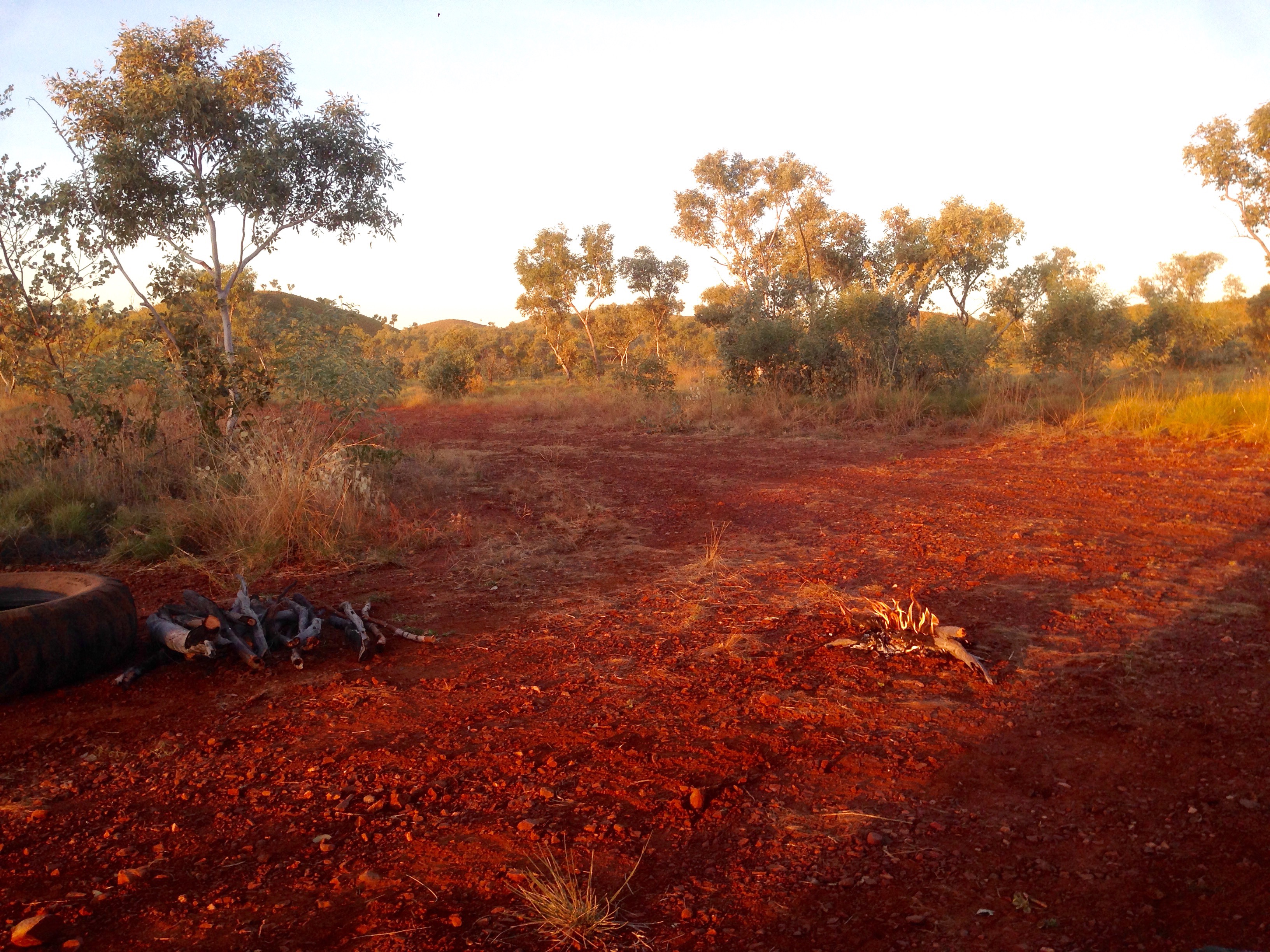
Well, I have to say I thought it was great. Maybe finding a couple of ripper bush camps helped?

I have to admit to being a real truck fan so for me watching out for the enormous road trains was an added bonus. These beasts are truly gargantuan. Think of a normal semi, or as others may call them articulated trucks. These beasts have four of those trailers joined on the back so your looking at about 60 meters long being towed along by a 600 horsepower Kenworth.
These trucks are made in Victoria from an American design modified for the harsh Australian conditions. Around 50,000 of them have been manufactured since their introduction in the 70s but out here they are truly the king of the road so imagine my surprise as I see one in the distance, let’s say 2 km away. My eyes must be deceiving me. It’s on my side of the road.
Now what is the etiquette in these circumstances?
It’s very easy. Move over and let him go any where he wants! I did and that’s why I’m still able to write this piece.
To be fair it was an extremely rough piece of track and he was trying not to turn to a cocktail the 100,000s litres of fuel he carried. He was plying his trade from Alice across the Tanamai to points north and west. This is the north west’s life blood. We certainly found that out when we arrived in Halls Creek and found closed signs on the diesel pumps.
What do we do now asked a visitor?
Wait until the Roadtrain arrives! When will that be? When he arrives!

I really enjoy the drive, we keep a distance between the vehicles. The dust hangs in the air making forward vision almost impossible. I mean for at least 60 m of zip if a Road train passes.

We approach Wolf Creek!
Now I’m not a horror fan but for those who like to entertain themselves with fear, this location is the site of an horror film par excellance. I’m just not into that entertainment. In fact I’ve been known to cause great entertainment to others who find my easily alarmed nature amusing.
Take the other night.
We walk in darkness to a local hotel in Halls Creek. Two Aboriginal ladies join us and give us direction to the hotel entrance. I lead and as we walk up the path there’s some rustling in the undergrowth. My alarm level rises and unlike other circumstances where the rustling recedes, It doesn’t this time and continues toward me. Well I start hopping about squealing and carrying on like a pork chop ( for non Australians that means acting like a fool). Then a large cane toad appears. My dance pace increases with steps that at audition for Michael Flately’s troupe would have me touring with them in a flash.
I reach the hotel entrance and safety only to hear the chucking of our Aboriginal guides, muttering to each other about this dopey white fella. They of course are probably crocodile wrestlers and can’t understand what the ridiculous fuss is about. Still probably gave them a story to tell their pals who I could envisage all shaking their heads in disbelief.
I learnt my dance steps from earlier experience s with frogs. Whenever I saw a frog in the garden when the kids were young I would hop about like a complete idiot explaining to them that I just didn’t want to step on the poor chap. I think they never swallowed that either!
So Wolf Creek horror film would never be for me.
I think briefly that I should suggest we camp here for the night out of sheer bravado and so I could say to anyone who won’t “chicken eh?” but can’t think of a sound excuse for withdrawing my suggestion if anyone actually agrees. So I dare not raise it.
If you’ve seen the film you’ll realise that the acting from those who should be awarded an Oscar doesn’t actually come from their skills learnt at acting school but the realistic terror is real. They had no idea what was going to happen and were really terrified. I can’t help but laugh….from a great distance with the lights on!
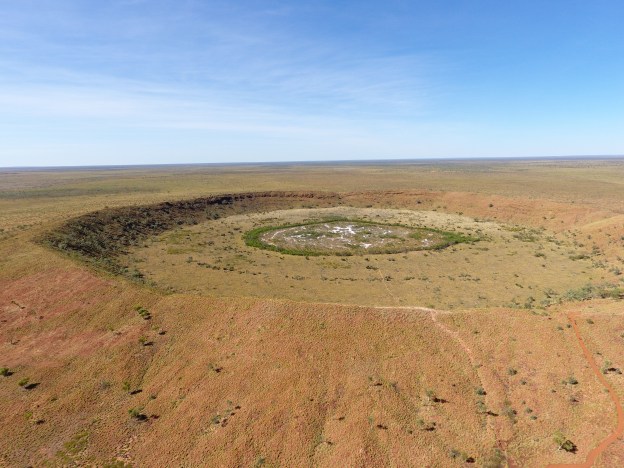
The crater is astonishing, written about elsewhere in the blog.
I fly the drone to about 100m altitude and take some photos. There’s a blip and the vision signal is lost. I see the drone so ignore the auto return to home and manually fly it back, re boot the system and set off again. A second warning ⚠️ sounds and again the return to home is triggered. I grab a couple of quick shots and land wondering if maybe my drone has caught my sense of spookiness.
I pack it away and we’re on our way.

As we approach Halls Creek I reflect on the previous couple of days in the desert.
I don’t care what’s said about the Tanami I loved it.


Sent from my iPad
Wolfe Creek Crater

We turn off the Tanami Road to visit the Wolfe Creek crater.   A meteorite hit the earth here millions of years ago, shattering our planet’s crust like a stone hitting the surface of a pool of water.  The impact site is apparently the second largest in the world.  It’s not famous for that now of course, but for a horror movie located here.

The road to the crater is lined with yellow flowering acacias as if it were an avenue of trees leading to a grand European house.   The colours are delicious, the red road strewn with the fallen yellow flowers.

The walls of the crater tower above the car park.  They too could come from a Grand Designs TV programme.   Perfectly round clumps of silvery green spinifex grow up the crater, interspersed with yellow acacia bushes and lilac wild flowers.  The vegetation glows against the smooth red and pink rocks.  I decide to get my garden landscaped just like Wolfe creek…

We climb to the top while Richard readies his drone for aerial photography.  The scent of the acacias is like a dusty sandalwood.   The crater’s walls form a complete circle.  Down below we see rings of different greens, as the native plants choose to grow on their preferred mineral earth.  The ripples sent out so many years ago are frozen in time, circle within circle into the centre of impact.   The garden below is lush.  Water flows down the walls in the wet season forming rivers that meet and pool at the centre of impact.   Even now we see an oasis of trees there and hear the distant call of birds.

We are brought back to the 21st century as Richard’s drone buzzes into life and flies at eagles’ height, far above us, capturing aerial photos of the site.   The site is on too large a scale to be photographed any other way.  Beryl has a brave attempt and masters the art of the panorama with her camera, helped by a kind traveller we name Neville the nomad.   The brave man is travelling on to the Canning Stock Route alone.  This is a rugged four wheel drive trail that is usually attempted in packs.   Good luck Nev, we hope you make it.

Flying north

I fly in to Alice.  A short drive from the airport and we’re on the Tanami Road,  heading into the remote desert north of Alice Springs.  Suddenly I’m in another world.  Am I ready?  My mind is still in Pennyroyal with our farm, the cows, dogs, chooks, geese.  Even the wellbeing of the bees in our hives gets a fleeting thought.

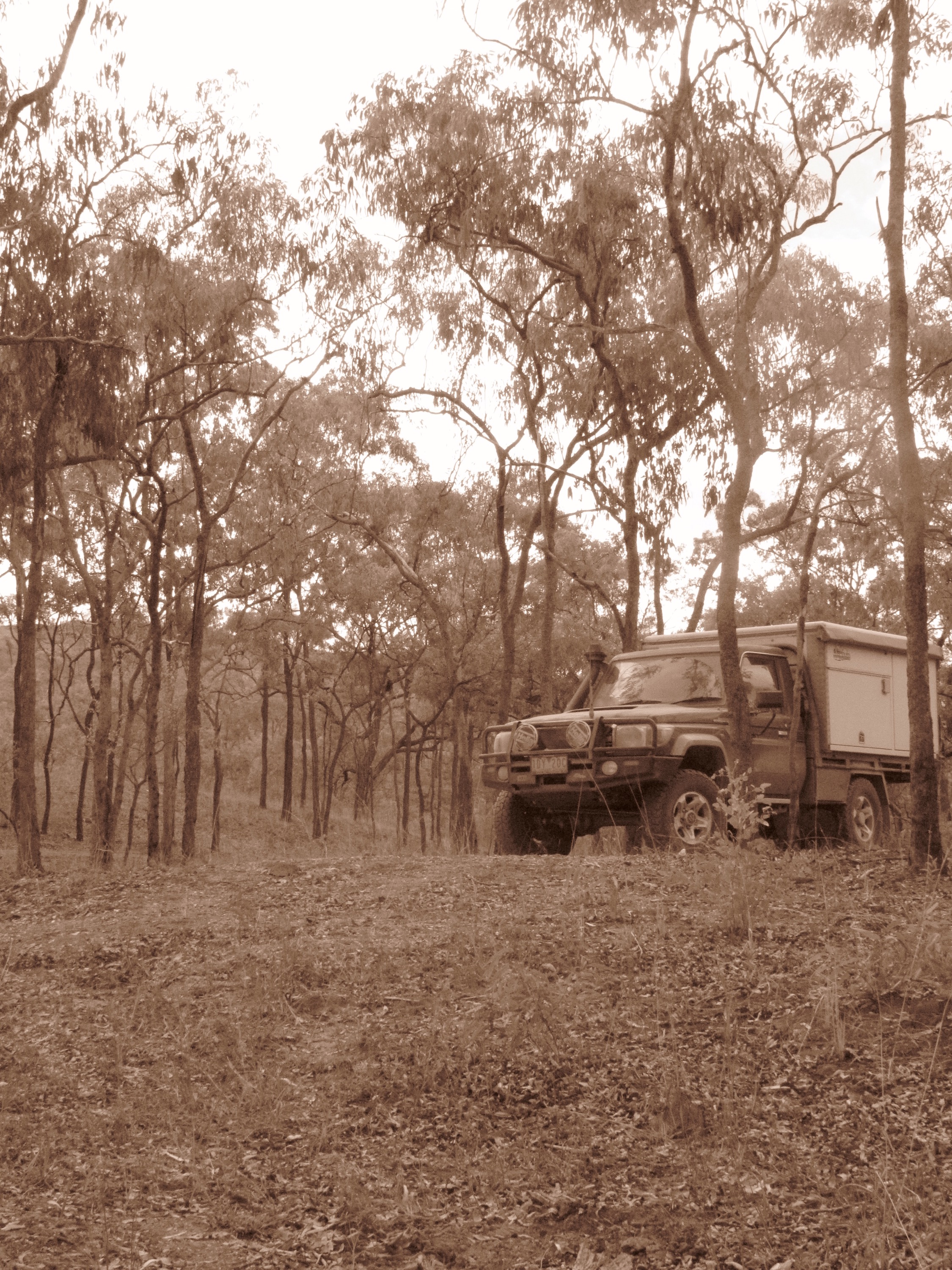
We camp the night at Tilmouth Well.  It’s winter in the red centre and oh, so cold.   Mint and rosemary lamb chops sizzle on the campfire grill.  The hot meal and layer upon layer of clothing are our attempt to ward off the cold.   

It’s Territory Day.  The only day of the year it’s legal to set off fireworks without a permit.  What a shame we don’t have any.  After dinner we leave the warmth of the fire to explore a dry sandy creek bed running alongside the campsite.   A secretive Howard runs ahead, on a mission.  What is he up to?   The dark night explodes with a spinning sputtering wheel of light and we cheer!  Fireworks!  Vive le Territory!

Our cosy camper feels more like an icebox when we retire to bed.  I’m under the doona fully clothed, wearing the hood up on my fleecy hoodie against the chill.  But sleep comes quickly and soon the icy cold night breaks into a clear bright day.  Lying in bed I pull out Songlines by Bruce Chatwin, my choice of reading for this trip.  In the first chapter I read how aboriginal myths describe the creation of the world.  They believe their dreamtime ancestors walked through the country singing the land and all that lived in it into being.  I love this idea.   Life from song.

Humming Nessun Dorma I quietly sing this day into life.  I climb out of the camper and line up my wash bag contents on the rickety little camp table.   The sun shines through the gum trees.   Its weak rays carry the promise of warmer weather.  I splash icy water onto my face and shock my system awake to start the day.  Time to head north.

Outback, suburbia. Suburbia, outback.

Guest author: Richard McSephney

What an incredible day.  Departing Port Augusta, at the top of the hill turn left to West Australia, turn right to Darwin. It doesn’t matter, 3000 km either way before you see an ocean again.

This is the point at which a line has been drawn in the sand.  The outback starts at the 110km speed advisory.  Literally, suburban town abruptly stops and the deep red sand and mint green saltbush contrasts with the bright blue sky. You could straddle it. Outback, suburbia. Suburbia, outback. It truly is that simple.

I find myself at peace. I’m a total novice but I feel strangely belonging. I love this feeling. I feel at home. It can’t be so but that’s how I feel. I truly wish I’d known this place earlier.
The day is spent thundering up the Stuart Highway. We aim for Coober Pedy some 600 km away.

Janette has invited us to visit her on Ingomar Station about 50 km from Coober Pedy. There has been rain so our route has to be carefully orchestrated to ensure we don’t damage the road or get stuck in the soft slippery soils of the outback. Following Howard’s ute looks like attending a neatly choreographed dance as the Landcruiser slithers sideways, is carefully caught and scrabbled for grip. It feels like ice.

Dave a maintenance man on the station relays a route to ensure we make it in.
“About 40 km from Coober you’ll see an overpass. Keep the mine haul road on your left and follow a bitumen mine road for about 20 km then turn left pass a dam..”…and so the instructions go on. The homestead is about 40 km off the highway. It never used to be but the state rerouted the road and now the driveway is essentially 40 km long. Now that might sound a lot but dimensions here are of gargantuan proportions.

The cattle station has 3 airstrips and its very own atomic shelter. This is located in the prohibited Woomera area and not all that far from Maralinga where from 1956 to 1963 Britain tested a few atomic bombs. It was safe though, no chance whatsoever of the cloud drifting anywhere near Westminster! Not so for our host’s property as the earth shelter testifies! Wonder how the animals were protected?

The adjoining station Anna Creek is the largest working cattle station on earth. Anna Creek and the associated outstation, The Peake, cover 23,677 sq km of pastoral land, which will double the size of Williams Cattle Company’s holdings to some 45,000 sq km. Together, they have a capacity for 35,000 cattle. It’s larger than some European countries.
So by contrast our host’s property is a modest 1,000,000 acres! That’s twice the size of the ACT (Australian Capital Territory) and twice the size of Luxembourg.

The station is home to 13,500 sheep and 3,500 cattle. The logistics of running a place like this are staggering. The cattle yards are just 50 km away, with a second set 150 km away. Last week it took two helicopters 5 days to bring the cattle in. That doesn’t include the 8 ringers on motorbikes assisting.

This is not an operation for the faint hearted.  Scott the new owner has great plans for improvements as the station is a bit run down and when I see the stocks of pipes, steel, trucks and machinery I can only marvel at the task ahead.

We gather wood for a fire and I’m reminded of the story of an adventurer who not that long ago met a King Brown snake whilst gathering wood.   His body was found 7 years later not far from here. I shudder at the memory and look out into the dark where I hear shuffling and crackling. I call out…”You ok Howard, no sign of snakes?”

Where was I, you ask?  Standing on the step of the Landcruiser holding a torch so he could find the way back, that’s where I was.  Oh come on, that’s also a dangerous task.  I wasn’t shirking my responsibilities, you could easily slip off and sprain your ankle.
It is a tough job and someone had to do it and to be fair it was Howard himself who planted the fear of snakes by telling me the story in the first place.

It was a very cold night and we wake early to the sound of the fleet of vehicles heading off to the far flung corners of the station to start the day’s work, for us a cruise day toward Alice.

Maytown – Ghosts past and present

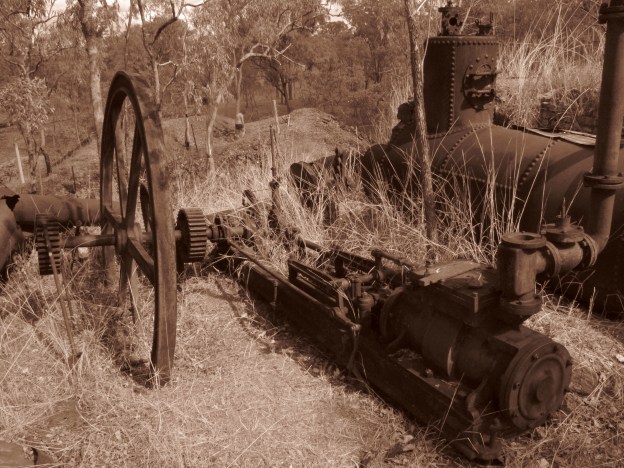
There’s nothing left. A few foundation stones, the kerb line, an old chimney stack. Maytown, Queensland was once a thriving gold town. Now, less than 150 years after it was founded, it’s turned to dust. Just another tourist curiosity.

They rushed here to make their fortunes. British, Chinese, early Australians all. For a few short years the town flourished. It had pretensions. There, look, the cornerstone of the School of Arts. Over there, the bank, a cemetery.

Prospectors found gold here on the Palmer River in 1873. Word went out. Hopeful diggers made the long and treacherous journey from Cooktown on the coast. Some came on horseback, some walked the hot, dusty interior of a little known land. Money on their minds. Hidden treasure.

The Main Street was lined with granite, built to last. It was a busy town, well served by Chinese shopkeepers, two butchers, a baker. If you close your eyes, you can almost catch the sounds of ghostly footsteps, the laughing, boasting voices in the bars of the old hotels. A hint of charcoal on the dusty wind, the hot yeasty scent of fresh baked bread from the baker’s oven. Built in brick, the oven still stands.

Maytow, Queensland,ghost town, australia

Road to Maytown

But now, this town is just a ghost town, abandoned. By 1945 it was deserted. Like a desert flower it grew quickly, bloomed, then withered away when the gold ran out. The scrub and sands are devouring it, taking back the land to grow food trees for the Palm Cockatoos.


But the story continues. The road to Maytown has had to be compulsorily purchased to allow access across the private land that surrounds the reserve. Tourists are not welcome here. Someone has padlocked the gates and laid nails and other sharp objects on the road. Tracks have appeared leading off into the bush, confusing travellers.

Queensland Parks posts a letter to landowners on the wall of the little tin tourist shelter, right next to the map of old Maytown. The public has a right to access the area. Report any interference immediately.

We meet a group of men on quad bikes, exploring the old minefields. When we ask about the route back through Palmersville, they shake their heads. It’s closed. Don’t go there. They tell us stories of murder, gunshots and missing persons.

The wind whistles down the remains of the Main Street. Dust swirls. It’s time to go. We are not wanted here.

Crossings and Crocs – a driver’s perspective

All respectable 4WD magazines highly recommend that any river crossing is walked to establish route, unseen obstructions and hazards.  We’re above a latitude running through Cairns and that is significant.  Guess who lives up here?  Yes, crocs.

Never mind telling me it’s a freshie.  It can’t eat you whole, or they won’t bite you, they’re crocs.

Even if you’re not freaked out by that, their bigger cousins are salties, estuarine crocs.  Saltwater crocs grow as big as a Holden Commodore and are at least as fast.  They eat you whole.

On the trip up to the area we stop for cuppas.  I get out, wander over to the picnic spot and there, right in front of me, is a ten foot sign saying, Warning – Achtung Estuarine Crocs inhabit this area.  They’ll eat you or tear off your arm.  It didn’t quite say that, but my croc phobia has me sprinting back to the ute.  

At every stop someone tells me a taller story about a croc near miss.  About how big, mean and sneaky they are. You see my dilemma?  We’re on a journey which is punctuated regularly with a croc infested creek crossing. 

 I’m encouraged to walk to the water’s edge at one crossing by Max and Malcolm.  They offer words of encouragement then, just as I’m settling down, Malcolm strips to his jocks and leaps in.  I almost faint.  Max howls with laughter and Malcolm continues to splash around, calling, “there’s no crocs here, come on in.”

Up here, if there’s water there’s probably a croc, I’ve been told.  Every time my fear subsides, a prank is formulated to restart my heart at an increased rate.  It’s a newfound pastime for Howard, who thinks up new impressions of reptiles, leaps out or sneaks around waiting to startle the unexpected… usually me.

We arrive at another crossing.  It looks like the site of an air crash.  Devastation on the banks, car body parts decorate the trees.  They could even be the Christmas trees displayed at a wreckers’ holiday party, baubles and tinsel replaced by Nissan bumpers, Landcruiser steps, the radiator and inter cooler from a large 4WD.  This is a place where the gods of the crossings have to be appeased.  The onward journey toll requires the traveller to deposit a body part.  We pass toll free!

I ask Max about a tale Malcolm related of a creek crossing years earlier.  Heather allegedly walked waist deep across a muddy brown fast flowing creek.  Max laughs. “What you have to remember is that if you smack a croc on the nose with a thong, job’s done, it’ll move away”.

I look at him incredulously.  “Oh, I agree, it’s not straightforward and it could get awkward if you catch the thong between your toes at a key moment.”  He strolls off under a cloud of cigarette smoke, chuckling loudly.  I can’t quite convince myself he’s joking.

Even though I’m joking about crocs, if you travel this way you’re going to invade the croc’s home.  He’s protected and must be respected.  Common sense has to prevail.  Read the Crocwise signs and give all due respect to these ancient and wonderful beasts and then you’ll enjoy a fantastic trip through the areas where they live.

Oh, by the way, our unpaid crossing… We notice hours later Howard’s number plate has gone.  The crossing gods have collected their toll.
Written by Richard

Thursday Island Turtle, Torres Strait

Thursday Island, Torres Strait

Frank was our taxi driver on Thursday island.  He was a proud islander, so proud to share the history of his islands with us.

He was a big man with a broad grin.   So what if the taxi had seen better days?  We had Frank.

He drove us to the highest point on the island.  There’s a fort there, built way back in the nineteenth century to ward off Russian attack.

But the attack when it came was not from Russians, but from Japan.  He laughs.  Who would have thought it?  The Japanese were their friends, a high proportion of the island’s population were themselves Japanese pearl fishers.  Although the other Torres Strait islands were attacked,  he is sure Thursday island was spared the bombing in World War 2 because so many Japanese graves lie here.

Japanese graves on Thursday Island

Japanese memorial on Thursday Island

Japanese graves on Thursday Island

Japanese graves

We saw them in the cemetery,  small, simple graves amongst the exuberant coloured and gold encrusted headstones of the islanders.   Some of the islanders’ graves were wrapped in what looked like blue plastic tarp.   Frank explained. When a family member dies, their in laws are responsible for organising and paying for the funeral and grave.   One year later, the family repays them and the gravestone is unveiled, marking the end of the official year of mourning.  And oh, what gravestones they were, made with marble from Italy, costing tens of thousands, the more elaborate the better.

There are fifteen different religious denominations on the island, fourteen christian churches and the fifteenth, the church of Rugby League!   When we visited, the State of Origin match was about to be played.  Houses were completely covered in awnings, displaying the colours of their team, NSW blue next door to Queensland maroon.   The islanders take their rugby as seriously as their church attendance.  Frank, together with about 90% of the population, can be seen in church on a Sunday morning.

The conversion to Christianity came in a flash, known as the Coming of the Light.  An island elder received missionaries on to the island in the late nineteenth century and resisted the temptation to collect their skulls. Almost overnight he decreed that they would follow the new way.  The islanders have thrown themselves into their new religion with gusto.

Soon our visit is over.  It’s been an interesting trip.  Thursday island feels like a foreign country.  It’s not Australian, but it is part of Australia.  The islanders, like Frank, have a pride in their identity.  They laugh about their headhunting, cannibal forefathers.  They seem to feel comfortable in themselves, markedly unlike the aboriginal people we have met on the mainland.  Here they were not displaced.  They have had to adapt to white colonial arrivals, but they are in their home and feel at home in it.

The boat trip back to the mainland is rough, the sea high in the rising wind.   The boat crashes into the waves with the full force of its 500 HP motors.   We leave Frank, the happy taxi driver, to his rugby, his church and his islander pride, an Australian from the Torres Strait.