Tag Archives: Australia

 Old Telegraph Track

Bramwell Station is a day’s drive away from Pennefather River.   The campground has space, shade and good hot showers.   In the late afternoon, we watch the station hands sorting weaners from their mothers in the cattle yards next to the campsite.

It’s a big night at the station.  There’s a smorgasbord dinner, with barbecued steak and sausage, a table groaning with vegetables and salads and a sweet sticky toffee sponge dessert.  Music gets us up on the dance floor, winning a bottle of wine for the first to dance.   Who would have thought the singer would include the theme to Gilligan’s Island in his set?
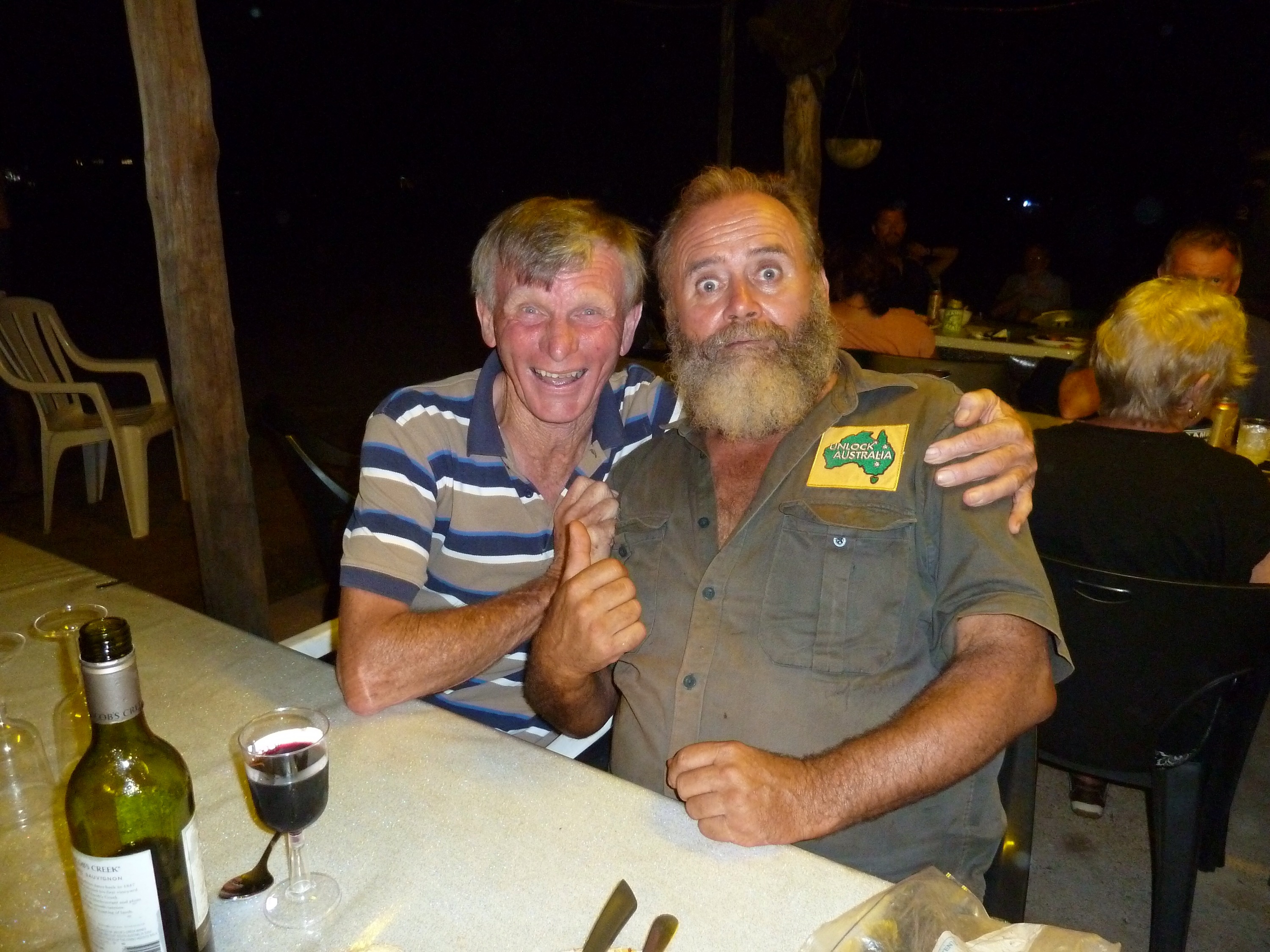
Malcolm and Roothie

A surprise guest at the dinner is Roothie, with his old Toyota Landcruiser, Milo.  He’s a four wheel drive legend and creates a buzz of excitement when he arrives with camera crew in tow.   Malcolm chats up Roothie, while his wife, Olive, makes a beeline for the handsome young camera man.

A high spot is the duet singing “Love Potion Number 9”.

The night is hot and steamy.  What sleep we grab is disturbed by the bellowing of the steers in the yard.    There’s a nervousness in the camp this morning.  Snatch straps are attached to the vehicles, just in case.  Today we are tackling the Old Telegraph Track.

Roothie and crew follow us out as we leave the campsite.  They are filming on the track today.

Old Telegraph Track

The track is narrow, tree lined, one car wide.  It is deeply potholed.   We soon arrive at Palm Creek, our first creek crossing.   A steep mud slide runs into a wet clay hole before levelling off into the creek.  The track runs through the creek to the left then up and out.

People are camped here, watching the attempts to cross.  “I wouldn’t take my tractor down there”, says Howard.  Cars are queueing behind us waiting to cross.

Max goes first.  Down the slide and to the left.   He tries to climb the steep exit out of the water and doesn’t make it.  He winches out.  Malcolm and Olive are through and then it’s our turn.

Richard is revved up, ready to go.  I’m gripping the door handle.   We scramble down the mud slide into the creek.  The ute rolls from side to side.  Richard turns the steering wheel left and we are driving up the creek.  The water is not too high, then the steep slope out is in front of us.   My heart pounds.  The engine revs climb and we shoot up the slope, rocking from side to side.

I can tell you, if I could have opened the door and got out, I would have done so there and then.   Christine, you would have had your eyes tightly closed.

I glimpse the track as we leave the creek behind us.  There’s a deep pot hole on one side and a huge lump of clay on the other.   The engine roars, one wheel drops into the hole and the ute twists sharply to one side.  We fly forward at an angle.  I can see only the sky.  Time slows down.  There’s a loud bang and we shoot out of the exit, landing on all four wheels.

Getting out, I look back at the vehicle.  It seems to be intact.   I hear later that our brand new ute missed a tree by a few inches.

I decide I’m not a fan of hard core four wheel driving.

The rest of the group make their way across without mishap.  Our Old Telegraph Track experience has started.
Weipa to Pennefather River

Weipa is a mining town.  Bauxite lies just under the surface here, an important input to the production of aluminium.  Rio Tinto has the mining license and is the major employer in the town.

There is a tour of the mine advertised at the caravan park.  It seems a good opportunity to see a working mine and find out how it operates.

Off we go, in the tour bus.  Rio Tinto employees have to live in Weipa to work at the mine.   There are no fly in fly out workers, except for some contractors.  The focus is on building a strong community of long term workers at the mine.  The bus driver tells us about the facilities Weipa has at its disposal, many sponsored by Rio, including a well equipped hospital.   Minor operations can be carried out, but there is no maternity ward.   Mothers to be have to fly to Cairns, four weeks before the baby is due.

The bus takes us across a long one way road and rail bridge to get to the mine.  We are told bridge maintenance involves the most dangerous dive in the world.  Divers have to work in an underwater cage because of the crocodiles, sharks and sea snakes in the water.

Haulage truck

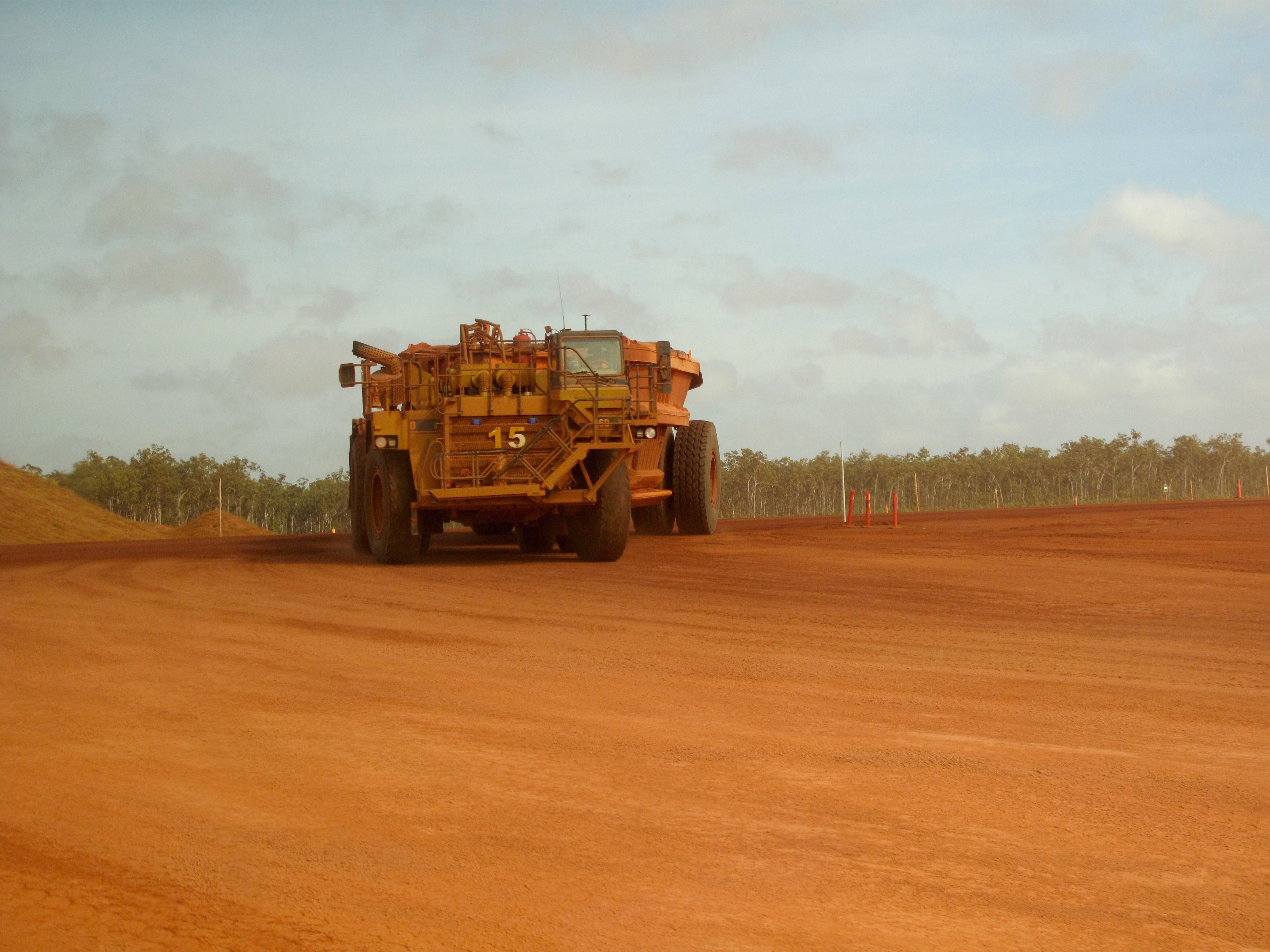
At the mine we watch massive water trucks drive along the wide roads, wetting them down to reduce dust.  Driving one of these mammoth vehicles is a sought after job in the mine.   We see huge haulage trucks thundering along the red orange roads, carrying tonnes of the valuable bauxite rocks.  Production operates all day and all night.  The mine has to constantly fill ships that carry the bauxite to Gladstone, Tasmania and NZ.

This is mining at its simplest.  The vegetation and top soil are removed.  Loaders dig out the bauxite layer and take it away.  There is no processing required.

Once the bauxite layer has been exhausted, the top soil is replaced and contoured to replicate the landscape before mining.   Seeds that were saved from the original vegetation are sown to regenerate the area exactly as it was before.   Any animals, including reptiles, are captured and housed while the mining is taking place.   The indigenous group that owns the land also retrieves any sacred objects and notes any off limits areas before the dozers go in.   The recovery work is world leading, they say, and is very effective.

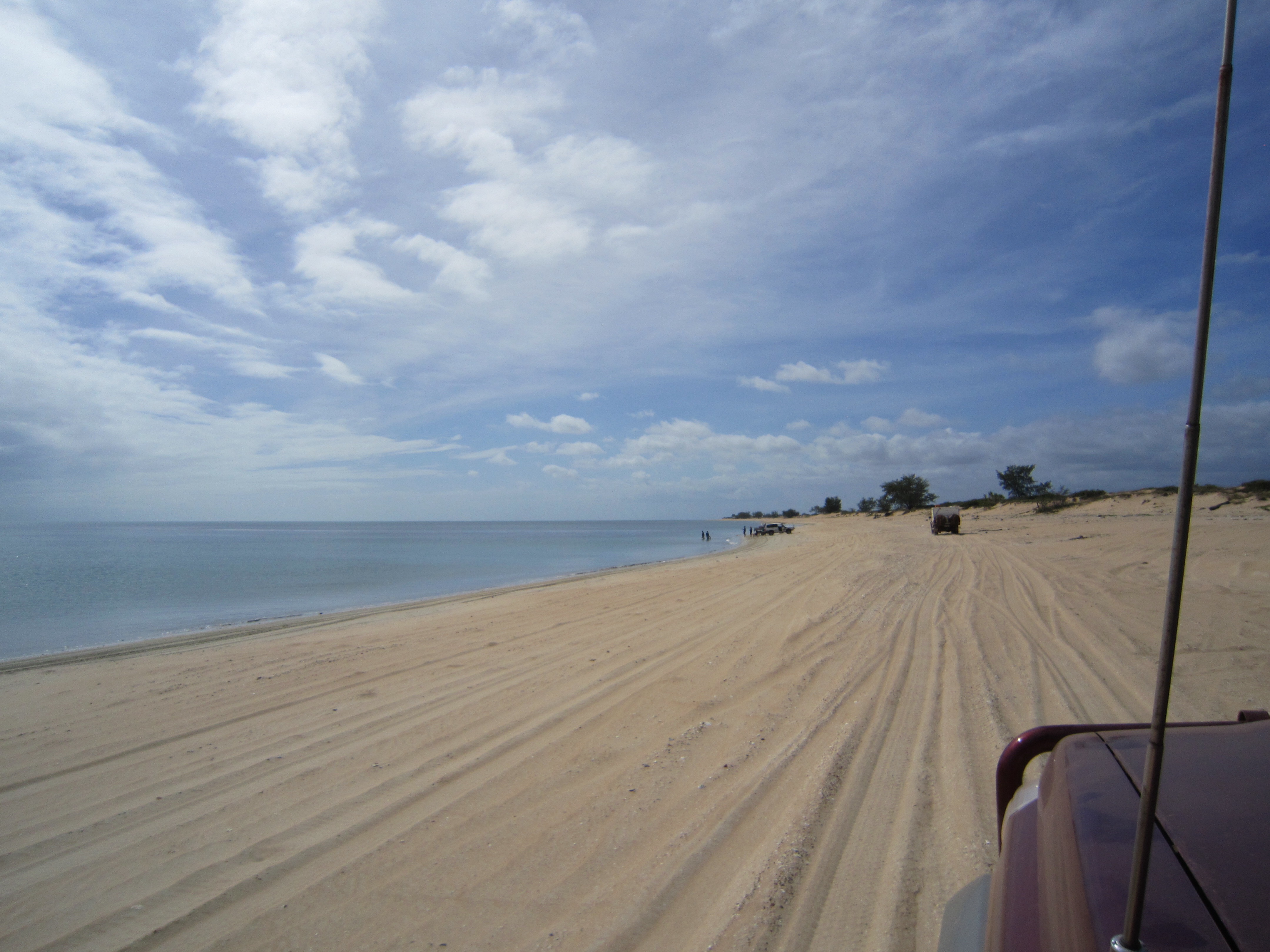
After the mine tour we head off to the mouth of Pennefather River for a beachside camp site.  We cross the mining roads and watch and wait as the monster trucks rumble past.  Down a narrow dusty track to the beach there’s a spot for lunch and time to prepare the vehicles for four wheel driving.  Tyres are deflated and hubs are locked.

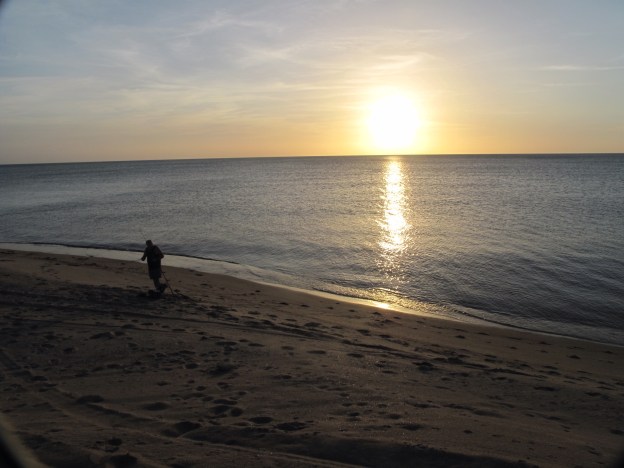
The beach is golden sand and the sea calm, blue and inviting.  No one is swimming here, there are crocodiles and sharks.  Even Aussies, who shrug their shoulders at venomous snakes and spiders, generally avoid swimming with these two apex predators.

Penñefather beach

Driving across the soft sand, our ute wags her tail in increasing arcs, trying to find grip in the loose sandy surface.  We follow Beryl and Howard down to the water’s edge, looking for harder sand.  As we start to climb back up the ridge to move away from the water, the tyres dig into the sand and we come to a standstill.  Richard leaps out, lowers the tyre pressures a few more pounds and engages both diff locks.   I stare at the water, just inches away.  It is hot outside with the sun beating down, then reflected back by the crystalline sand.  People call encouragement and ask questions on the radio.  The ute is up and away and we drive on to find the camping spot at the mouth of the river.

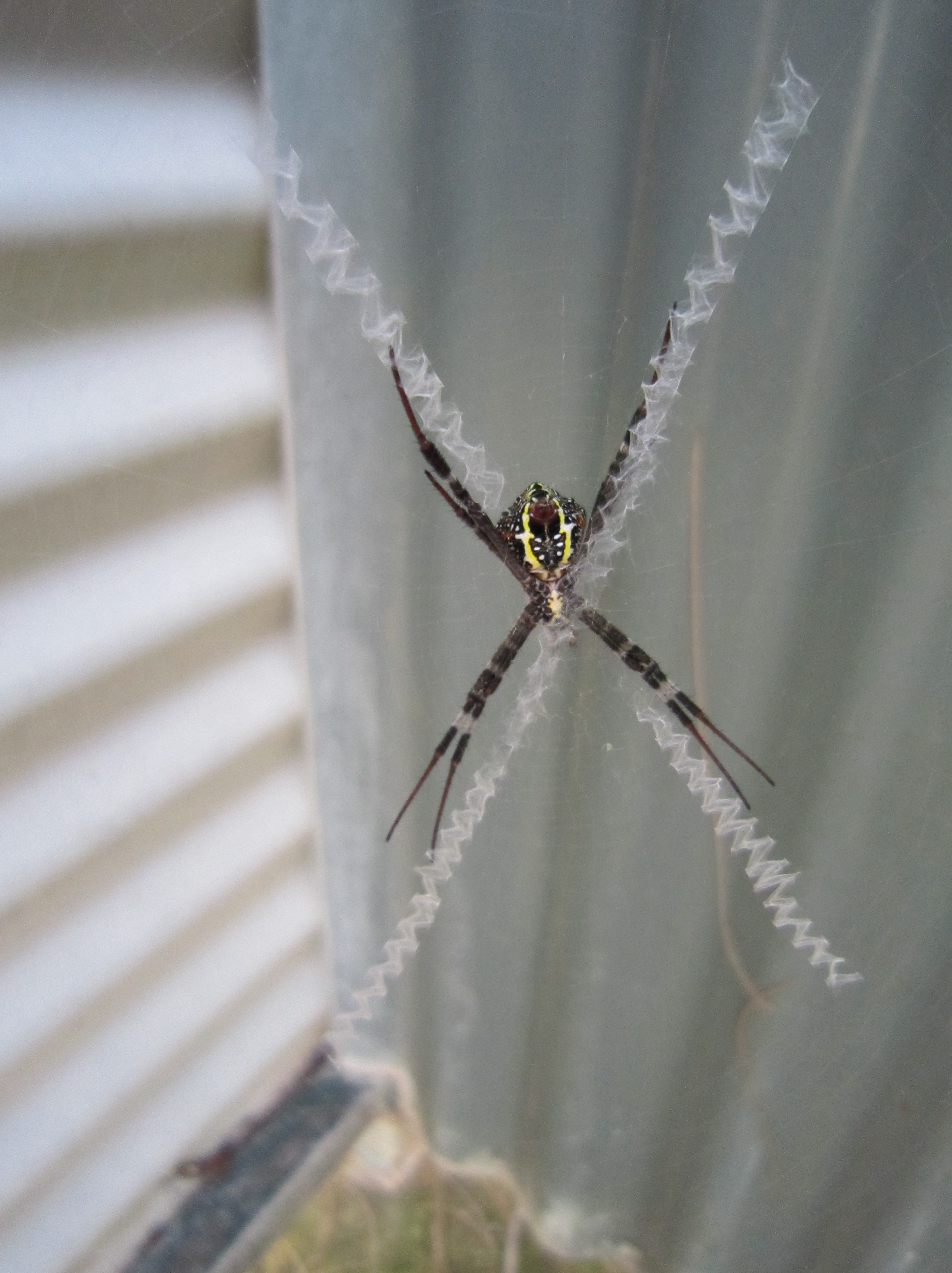
There’s an old ranger station just off the beach and a satellite dish provides the fastest wifi I’ve come across since we left Victoria.   Safari tents have been set up on the riverside and water is pumped to a basic shower in a tin shack.  A long brown snake is seen disappearing into a hole by the shower door.  A yellow and black spider sits inside, in an unusual web, marked with a white X.  There are a few campers here already, and not all of them are human.

Penne father sunset Penne father spider

The view is idyllic.  Sand, gentle lapping waves, swaying she oaks, blue sky.   Picking up my binoculars to look at a sea eagle on the sand bar, I see a dark shape on the sand.  It’s a croc.   He’s small, about four feet long.   As I watch he slides down into the water and lies in the warmth of the shallows.  A little later his brother is spotted on the other bank of the river.  I’m staying well away from the water tonight.

Max heads off to the beach, fishing rod in hand.  Standing where the sand meets the sea, casting out a lure into the shimmering water, with one eye watching the line set with bait, he’s at one with the world.

Deb Pennefather Max fishing pennefather

The camp site is busy, with trucks and quad bikes driving past late into the evening.  It’s a remote spot, but an easy weekend getaway for the workers of Weipa.   The sand is lined with criss cross tracks from their vehicles.

Few have heard of Pennefather River, but the map shows that this was the site of the first recorded European landing on the Australian continent.  A Dutchman, William Janszoon, landed here in 1606 and mapped the coastline.  The chart he drew was so accurate it was only a metre out from modern GPS sightings

Every place has a story.  The European story is now entangled with the story of those who have lived here for tens of thousands of years.  Turn the page, let’s see what the next chapter brings.

A night at Weipa

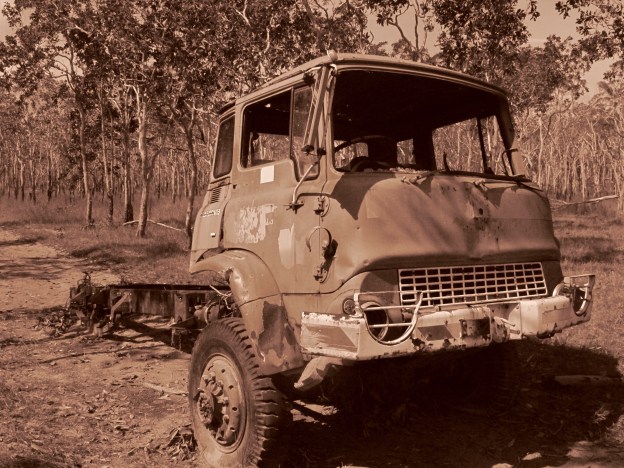
We are on the road from our campsite near Bathurst Heads.  This is not a place for people.  It is a place for termites, mosquitoes and crocodiles – and decaying old carcasses of trucks.  

Beryl walks out of the campsite in the heat.  I wonder at her bravery to walk among the swamps and billabongs, crocodile habitat.

Despite the desolate landscape, we come upon occasional wild beauty.  White water lilies shimmer on dark lagoons.  A wild horse watches us as he drinks, then turns away.  A horned bull stands and stares, daring us to come closer.   Flocks of black cockatoos perch on the scrubby trees.   There’s life in the scrub around us.

We turn towards Weipa at Kalpower campground.  The Peninsula Development Road is red, full of corrugations, but light rain damps down the dust thrown up as we drive along.  The roadsides are green with fresh new growth, grasses and eucalypts.   Flat sided magnetic ant hills stand high, buttresses built to point to north.  Tall striped grasses wave in the wind.

The road to Weipa is plagued by racing caravans, eager to book the last site at the caravan park.   They overtake on blind bends in clouds of red dust.

We are lucky to find enough sites free at the campsite when we arrive and we settle in.  Suzanne makes friends among the locals and is soon the newest member of the Weipa golf club.  This exalted position brings privileges.   She signs us all into the golf club for dinner and dancing, the best night in town.   It’s a hike from the caravan park and Suzanne once again comes up trumps.  She’s a hit with the local taxi driver, Steve, 59, and we travel by taxi bus to our evening out.

We dance the night away to seventies disco, night fever, hot stuff, Jive talkin, nut bush city limits.    Heather and Max hit the dance floor rock and rolling to greased lightning.   Through the evening, Suzanne sprays us with her magic mist, kept in a bottle at her side.  Is it a secret recipe to keep mozzies at bay, or love potion number nine?

Weipa is a hit with us, and we are a hit with Weipa.  As we leave a local says, “Don’t go.  Youse was our excitement.”

Ode to the mosquito

Loathsome bloodsucker, vampire, oh

I do detest the mosquito.

Biting, stinging, I’m itching so

I do detest the mosquito.

…………

Late at night I hear her whine, oh

I do detest the mosquito.

She’s hard to see, but bites me so,

I do detest the mosquito.

………..

It’s not as if I’ve done her harm, oh

It’s hard to love the mosquito.

I don’t use Mortein or mozzie bombs, oh

It’s hard to love the mosquito.

…………

I’ve tried it all, cream, spray and rub, oh

I do not love the mosquito.

Eucalyptus mist, soothing gel aloe

I do not love the mosquito.

………….

So please little mozzie,

Let me be.

I’m red and lumpy and itchy you see.

I need a rest, a holiday,

So do me a favour fly away,

Oh, then I could love you mosquito.

Yes, then I could love you mosquito.

Inland to Bathurst Heads

It’s 10th June, Richard’s birthday.   We drive inland from Endeavour Falls along Battlecamp Road.   The red dirt is back.

The landscape has changed.  It’s the opposite to the rainforest.  The red roads gradually turn yellow as we drive through the low growing scrub and splash through the Normanby River creek crossing.

Old Laura homestead still stands.  A wide verandah tin and timber house, an old well, workers’ housing and the old forge remain.    The house is protected with chicken wire, to keep out tourists and perhaps the wildlife.  It must have been a hard existence living here in the heat, eking a living from the land.

Steel grey ant hills dot the country as we drive on from Laura.  This is national park land.  New regulations require all campsites to be prebooked online or by telephone.   This is bureaucracy at its best.   It’s totally impractical in an area with no mobile reception, public telephones or wifi.    It’s not in the spirit of bush camping to plan ahead and book the week in advance from Cooktown.   Plans have to change when a closed road, a vehicle repair or a fascinating side track delay the camper.   We shrug.  We will look outside the national park for our spot tonight.

The Kalpower River crossing is wide and flat, water tumbling down on the rocks below.  We drive on corrugated public roads through aboriginal freehold land.  The ant hills grow as tall as the scrubby trees.  Sculpted and impassive they look like druids’ standing stones dotted across an ancient woodland.  Wild horses gallop away as we pass.

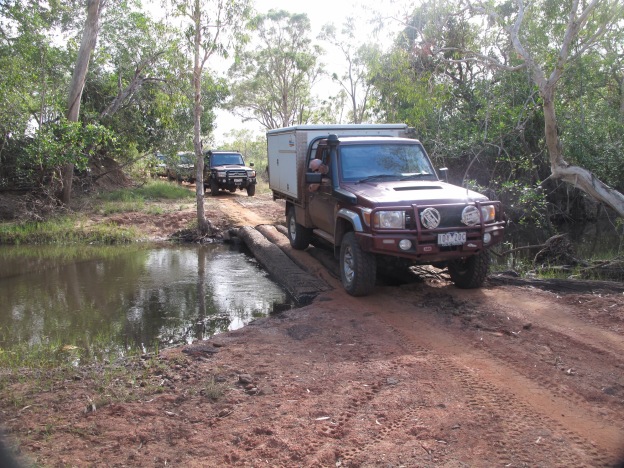
There are two options when we cross the Marrett River, through the water or on a rough timber bridge, a few tree trunks slung across bank to bank.  Taking the bridge, we wonder if it will be strong enough to take the weight of the car.   Just to be sure we stall the engine as we cross and spend a few moments gazing down at the river, proving the bridge is strong.

Olive tells us tales of the old Kalpower homestead that is nearby.   It must be deep in the bush now, because our search is in vain.  There are no signs of habitation except an old Bedford truck that gave up the ghost many years ago.

Further down the road,a muddy four wheel drive approaches us, containing two young men.   Don’t bother trying to get to Bathurst Heads, they say.  They have been bogged down in a mud hole for three days and have had to winch themselves out.  The road is impassable.

We make do with a campsite just off the road, towards the river.  It’s a rough, scrubby spot.  Max heads off to the river to fish.   We make camp and get a fire started.

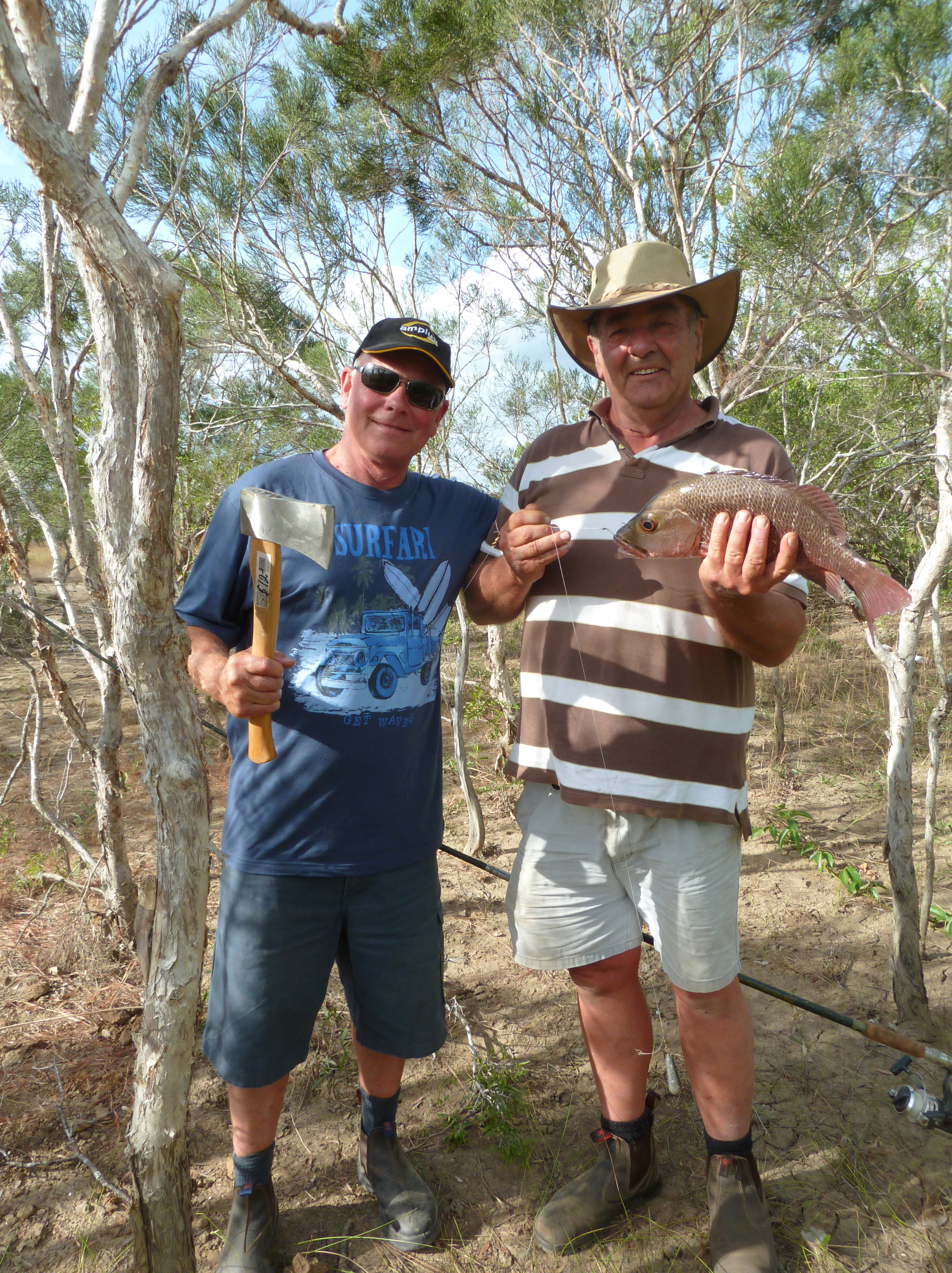
Richard, Dom and Beryl head down to the river to see how the fishing is going.  Richard, axe in hand, ready to fight off any crocodiles who may make their home here.  This morning we heard a crocodile story from the owner of the campsite.  A man was fishing in the river near the campsite and was grabbed by a four metre crocodile.  They had never seen one in that area before.  Male crocodiles have to find their own territory and move out into new areas as the population increases.

Rich and Max and axe

Luckily, the axe is not needed.   Max catches a lovely Mangrove Jack and a Bream, and Dom another Mangrove Jack.  The fish are cooked on the campfire for dinner.   The delicate taste of the fresh fish is better than any haute cuisine.

The mosquitoes are vicious.  Long trousers and sleeved shirts are essential.   They force an early retirement to our beds, after a fine ginger beer scone dessert, cooked for Richard’s birthday by chef Howard.

Cape Tribulation to Cooktown

It’s raining.  Cape Tribulation has a beautiful beach, fringed with palms.   The clouds are grey and the waters dull in the gentle light.    We run from the car in the rain, but do little more than glance at the beach before we are on our way again, on to the Bloomfield Track.  

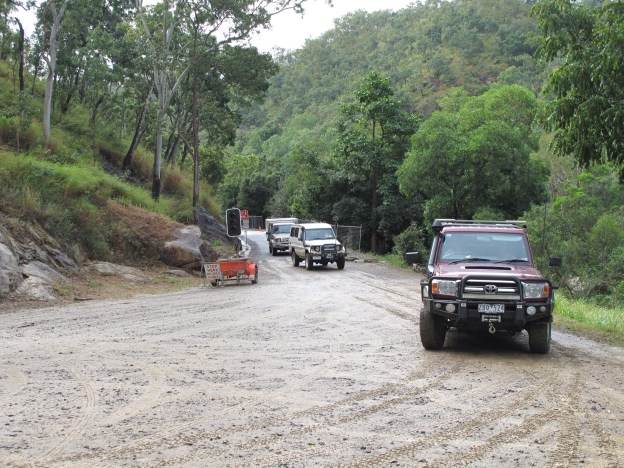
The gravel track is steep.   Sharp climbs and rocky creek crossings provide our first driving challenge of the trip.  The track follows the coast along the edge of the Daintree Rainforest.  Tropical Tarzan vines hang down over the road and tangle around fan palms and tree ferns.  We speed over the track, as fast as the landcruisers will carry us.

Not everyone who passes by values the rainforest.  It’s sad to see styrofoam food containers and aluminium drink cans lying on the roadsides.  

We stop at an indigenous art gallery for coffee and a browse.   The art is not as impressive as the nearby waterfall, thundering down on the rocky river bed.

Further along the track, misty mountains rise up ahead of us. They create the heavy rainfall, about 7 metres a year, that is needed to sustain the Daintree rain forest.  

Lunch is at an old hotel with a long history, named The Lions Den.  It’s been a watering hole since the 1800s.  Check out the car park these days and it’s full of four wheel drive vehicles.  Like many outback pubs, the walls are covered with the names of past customers, backpackers and campers.   Is there a need to make a mark?  To be part of a travelling tribe?  How many return to find the names they scrawled years ago, to touch their youth?

On again.  Next stop Cooktown.

  
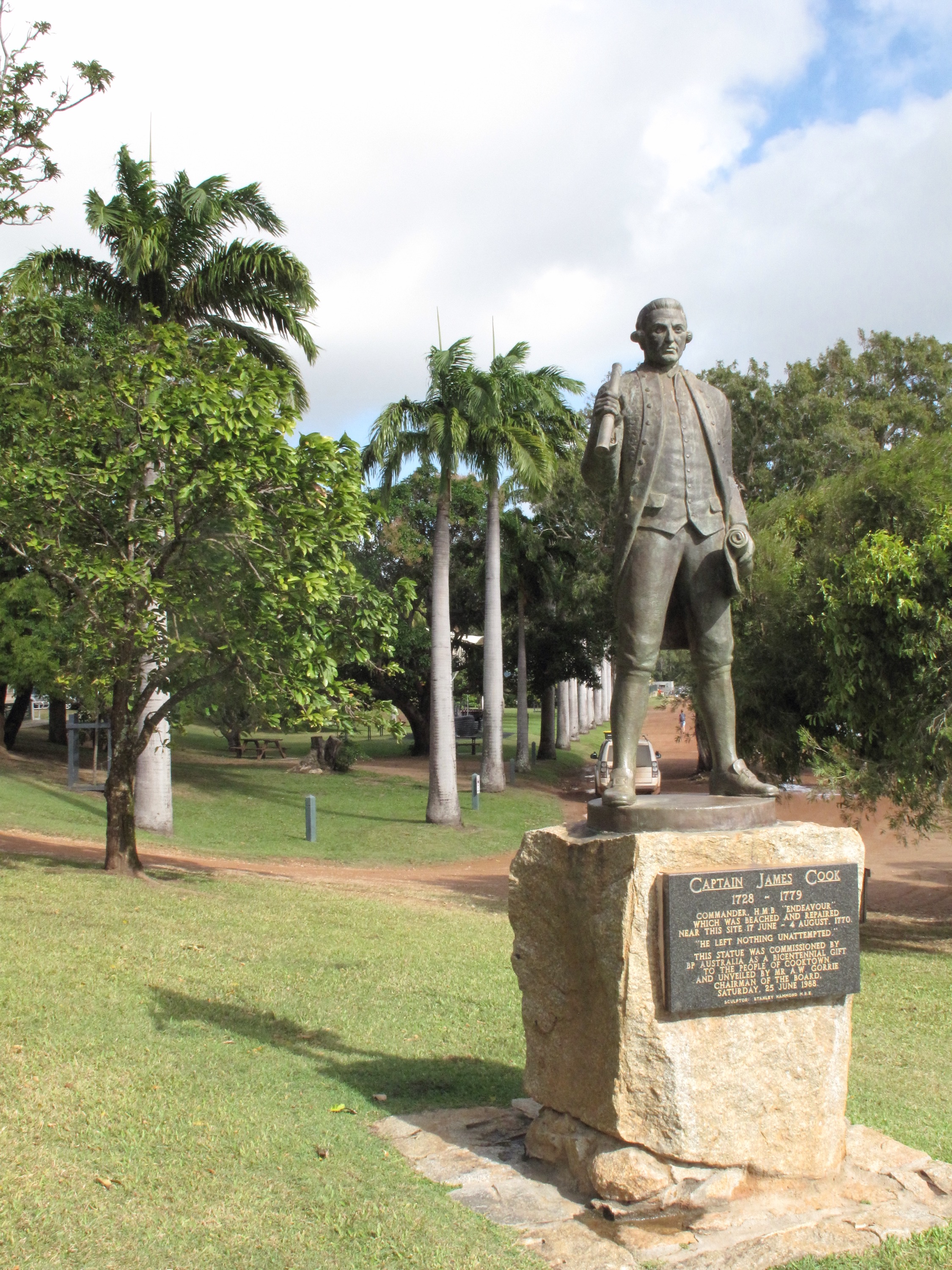
This is where Captain James Cook landed to repair his damaged ship, back in 1770.  There are memorials to Cook, including a life size statue on the waterfront.  The town grew to a major centre when gold was discovered on the Palmer River, but has now become a pleasant, but overlooked backwater.  Who knows, it’s time may come again.

At the end of the day we drive to Endeavour Falls to camp overnight underneath the palm trees.

Where the rainforest meets the reef

The roads hug the coast in Douglas Shire, steep rocky cliffs running along sandy beaches, like a tropical Great Ocean Road.   Turning away from the ocean here you do not see mountain ash and tree ferns, but dense green walls of sugar cane, neatly clipped and standing to attention like a sailor’s crew cut.  The air is as warm and steamy as a gardener’s hot house.

The entry to Port Douglas is grand, lined with mature palm trees.   It’s a much bigger town than I’d imagined, a tourist Mecca.   The wharf is busy, with boats offering crocodile spotting tours in the waters nearby and ocean going yachts bristling with equipment and the scars of past voyages.

  
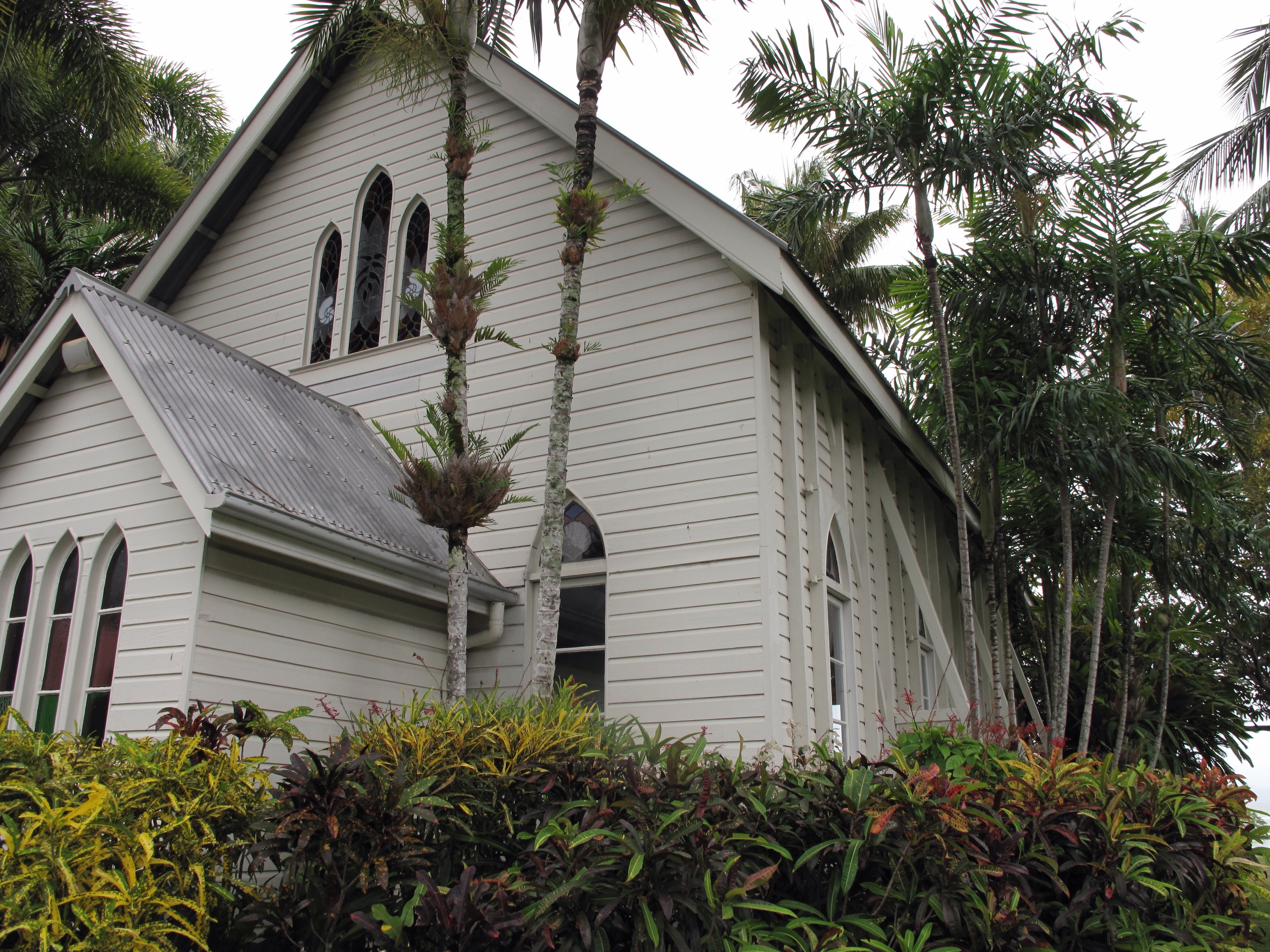
A white timber clad church stands on the bay.  It dates from 1880.   The little church is cool and peaceful inside.  The east window looks directly out to sea, framing the view to the Great Barrier Reef.  I wonder how many have sat in these pews, what stories they could tell of the history of Port Douglas.  Who was married here?  Who tried to save the church when it was destroyed by cyclone in 1911?   The building keeps its secrets.

We walk through the main shopping street, passing tourist souvenir shops, ladies clothing stores and hotel bars in colonial buildings.   Moccas famous pies live up to their reputation and draw a succession of hungry customers into a side street for lunch.

From Port Douglas we once again pass through lush green sugar cane country.   Cane trains stand loaded with harvested cane.  We are in the wet tropics now.  Clouds sit on top of misty tropical mountains.  We see banana orchards, each bunch wrapped in its own protective bag.

Stopping at Daintree village we wander down to the river.  Two fishermen tell us tall tales of man eating crocodiles.  They are not joking.   The number of signs warning of crocodiles is increasing as we travel north, as are the tales of attacks.  We take the warnings seriously…

The utes queue up for the old cable ferry that takes us across the Daintree River to Cape Tribulation.  It’s a steep climb up the other side.  Now we are truly in the world heritage Daintree rainforest.  

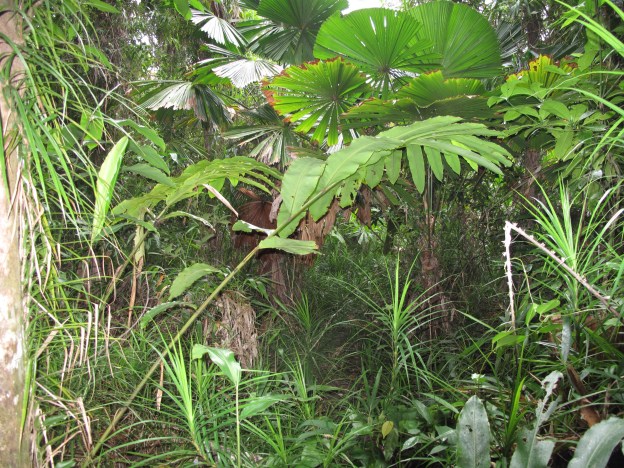
The forest is dense around us.   Strangling figs clamber up the trunks of fan palms, seeking the light.   Elephant ear vine leaves spread out to capture the few rays of sun that break through the rainforest canopy.  The forest glistens and drips in the steamy atmosphere.

  
We take a walk in the rainforest with Cooper Creek Wilderness Tours.   Almost immediately a cassowary crosses our path.  Strange flightless birds, in the same family as the emu and kiwi, they have a horn like growth on their heads, bright blue necks and red wattles hanging down below.   Standing 1.5 metres tall they could be intimidating, but Big Bertha completely ignores us as she strides purposefully past.

The rainforest tour is fascinating.   We see primitive spiders that gather up their silk at night and camouflage themselves to look like thorns on the branch of a tree.   We hear about the yellow cyrus, the toxic white walnut, the zombie fungi and a tree that expels cyanide gas when chopped by an axe.   I am amazed by the height of the fan palms.  Here they form the rainforest canopy, a roof top of green that shades the plants below.  So tall, so high above us, we would need binoculars to spot birds or canopy dwelling marsupials.

Unfortunately, feral pigs cause damage to the rainforest that will never be healed.  While vines grow quickly here, many plants grow so slowly they can never recover when seedlings are wiped out by a wallowing pig.

Howard and I spy another rare creature here, a short, elderly, bearded Japanese man, in the rainforest with a film crew.   Dr Suzuki, we presume.

The evening light is growing dim.  We need to catch up with the rest of the party who have gone on ahead of us.   We have planned to meet at Noah’s Beach.  So we leave the wilderness tour and head down the winding unsealed road to find the campground.  

When we arrive, it is dark.  Driving around the wilderness campsite we peer at the campers in each of the sites.  No, we don’t recognise them.  Back on the road, we decide to circle around again.    I glance at a sign board at the entry, there is a piece of paper flapping in the wind.   

Stop!   I look at the paper, it says “See you at Coconut Beach.  M & O, M & H, D & S”.  

Where on earth is coconut beach?

We drive down the road, looking for a sign.  A voice crackles over the radio, “Turn right at Masons Store”.   

Turning right after Masons Store we find the lovely Cape Trib campsite on the beach and are reunited with our convoy.

Back to the land

The weather forecast is for winds at twenty to twenty five knots.   It’s already blowing white caps on the waters and whistling in the rigging.  We’re up early for our trip back to port.

Checking the chart once again, I can see that it’s going to be an exciting journey.   We will make our way down around the southern tip of Whitsunday Island, through a narrow channel called Solway Passage.   There will be reef on one side, rocks on the other and a lumpy sea from the action of the wind against tide.  Once we are out in the deep water to the South of the island, there may be some swell before we head through another narrow channel, Fitzalan Passage, to curl around the north of Hamilton Island and back to the marina.

The crew downs their doses of ginger seasickness remedies.   We recheck that all the hatches are closed, and we are off.

Richard grips the wheel and helms as I point out the marks and obstructions along our route.   The wind is growing stronger and stronger.   It’s gusting thirty to thirty five knots as we motor towards Solway passage.  

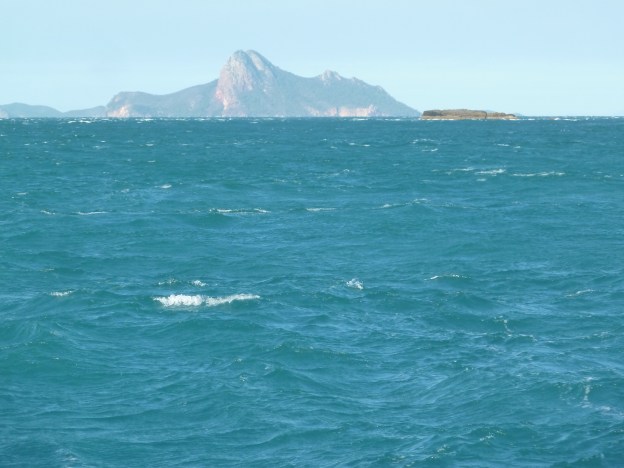
The reef extends out underwater from Haslewood Island to port and we need to keep close to Whitsunday Island to starboard.   The water on our left looks like a surf beach and to the right like a boiling cauldron.  Richard tightens his grip on the wheel and we push ahead.   We glance at the electronic chart for reassurance as we continue on a bearing that appears to take us directly into a rocky crag sticking up from the water ahead.

As the water gets deeper, the catamaran climbs and dips In the growing swell.   Olive whoops from behind me.   This is fun!

Hang on everyone, I call.  Able Seaman Jeffery is checking that the life ring rope is free of tangles in case of emergency.   We turn around the South of the island into deeper water.   We are on a roller coaster.  Safe now from the underwater rocks and reefs Alida is rocking and rolling in the motion of the waves and the two metre swell.

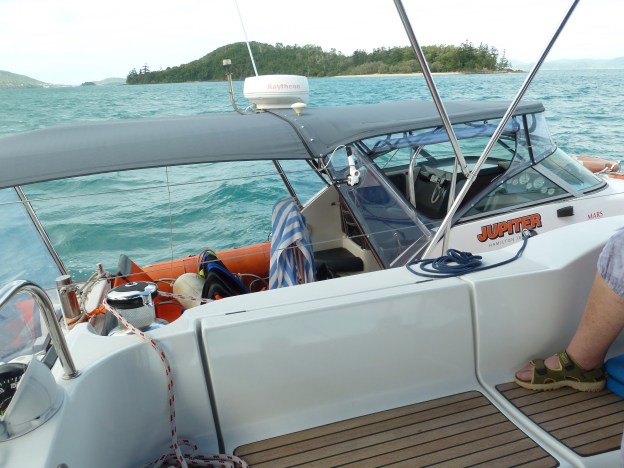
Hamilton Island resort can be seen in the distance.  It’s high rise blocks are distinctive in the green vegetation of the islands.   We point the bow in their direction and enjoy the rolling ride.

The island provides welcome shelter from the worst of the wind.  We turn into Fitzalan Passage and the sea bubbles and hisses over the reef to starboard.  Then the excitement is over.  Despite the thirty knot winds we moor safely in the marina.  It’s good bye to Alida and the Whitsundays.

The ferry trip back to Shute Harbour seems much quicker than it did six days ago.   We overnight at Airlie Beach, then drive all day to Cairns to meet up with Dominic and Suzanne.   Ready for the next adventure.

We are sailing

Cid Harbour is a sheltered anchorage.  We share it with four or five other yachts.   As the sun goes down, we see their white anchor lights shining around us.   We dance with them in an evening waltz, each yacht swinging on its anchor chain, back and forth to the music of the wind and the waves.

There is an air of anticipation about the crew.  Tonight is Gilligan’s Island night.  Each of us has been given a character to play from that ancient US TV show.   The identity of our alter egos has been kept secret until now.   Costumes on, we emerge from our cabins and attempt to stay in character through the evening meal.   

Ginger steals the show, with her firey red hair, black evening gown and dark sultry looks.   She makes a fine figure casting fishing lines from the bow of the boat as shoals of tiny fish leap in the moonlight.

In the morning we rise early for a day of swimming and snorkelling at Butterfly Bay.  Time to relax and enjoy the warm sunshine, to slip off the back of the boat into the turquoise blue water and to head off with snorkel and flippers to explore the underwater life of the coral reef.  

The next day the wind is blowing a good fifteen knots and the sails go up.  We are sailing!

Heather proves to have a sensitive hand on the helm, getting the yacht to move at a respectable 7 knots.   Richard tightens up the main to eke out a little more speed, while Max trolls his lines from the stern.   As the sun rises in the sky, the crew get sleepy in the warm sea air.   Suddenly there is a shout and Max is reeling in a glistening blue mackerel.   The boat comes to life with calls of encouragement.   Reference books are consulted to identify the precise species.   Everyone wants to take a look.  The fish is too small to keep and is thrown back to the ocean depths, but the buzz lingers to liven up our sleepy passengers.

We tack down the coast, watching out for other yachts.  We admire the sleek lines of thoroughbred racers that glide past, overtaking us with ease.   A turtle swims alongside, lifting his head on his wrinkled neck to survey the surface before diving back down.  A whale, or is it a dolphin, slips past.

Our destination is Whitehaven.  The fine white silica sand squeaks underfoot as we walk the length of the beach.  Day trippers disappear on to the tourist boats. We climb into the jetty and return to the yacht.   

The evening ends with a huge full moon rising over the water, glowing pink against the azure blue sky.  The reflection of the moonlight on the surface of the water is broken only by gentle ripples in the cool breeze.  

Tomorrow we return to dry land.   Thinking back, it’s been a great few days on the water.  We have had no sea sickness.  Able Seaman Jeffery has manfully tackled every sailing task, proving it is possible to swim from shore fully clothed.  Gourmet meals have been cooked by the ladies in the smallest galley kitchen I have seen.  Entertainment every night has had us roaring with laughter.  

Howard has explored the underwater world.  Max has caught two fish.  Richard has managed the boat and engine in all conditions, forward gear or not.  And I have had a great day’s sailing.

Oh, and the skipper with his blokey ways will stay on the island, with Ginger.

Worse things happen at sea

Let go the mooring line!

She’s away.

Richard puts the yacht into reverse and we move away from the mooring.   A stiff morning breeze blows across the water.   The crew are up and about, ready to sail to Stonehaven Bay on Whitsunday island.

Crunch, clonk, clank.  All heads turn.  What was that? 

A grinding noise is coming from the stern as Richard pushes the motor into forward gear.   The mooring is drifting away to port and we are being carried north by the tide.

I can’t get any forward gear, he calls.   He pushes the lever forward again and the crunching noise grows louder.  

Can we pick up the mooring again?   

I don’t think so Debbie, it’s over there.  Malcolm points at a blue dot on the water in the distance.

Richard shouts, I can get reverse.   I’ll try to reverse back on to the buoy.

Yachts will reverse under motor, but steerage is poor, especially into the wind with the tide against you.  We are moving, but the mooring is out of reach.

Shall we put up the foresail?  I ask.  We’ll at least get some forward motion then.

Let’s keep trying the engine, I don’t understand what’s wrong with it.  It sounds terrible.

The yacht is holding its ground against the tide in reverse, but we just can’t get any forward motion.   

I look at the inexperienced crew around me.  Many of them have not been on a sailing boat before.  Sailing to another mooring is an option, but not an attractive one.  We are on a charter boat in unfamiliar waters.  While the channels are deep around the islands, there are hidden underwater obstructions, coral reefs and rocks.

I feel a little sick.   Not from seasickness, but from a sinking feeling inside me.  I have brought these people out on to the water to experience the exhilaration of sailing, to share something I love, only for the yacht to fail us on the first day.

I decide to call the charter company on the VHF radio.   We can hold our position in the deep channel under reverse gear quite safely for some time.  If the engine fails altogether, we will put the foresail up and sail into the main Whitsunday channel where there is plenty of water.  We are safe, but it’s getting uncomfortable out in the channel with the waves rocking the boat from side to side.  We could see some green faces if we don’t get moving soon.

Richard keeps working to try to get the gears to engage.  No joy.  We have to accept the gears have failed and we will have to suffer the ignominy of a tow back to port.

I pick up the VHF microphone.  Sunsail, Sunsail, this is Rhythm, Rhythm, over.   

Rhythm, this is Sunsail base, go ahead.

The radio exchange continues.   Sunsail Base asks us to get back on to the mooring if we can.   They will see if they can send a boat out to assist.    The conversation ends.

I ask Beryl to sit below and listen to the radio and let me know when Sunsail calls back.

The mooring buoy is truly out of reach.  I am soon calling back on the radio to request assistance again.  We’ve been sitting out in the channel for 20 minutes and no sign of the rescue boat.  The boat is bouncing around on the waves and although everyone is upbeat, we all know this is not a good situation.  I consider the option of putting some of the crew to shore in the dinghy if seasickness hits.

Sunsail are on the radio, calls Beryl.   I go down below and explain our situation again.   We switch to mobile phone to finish the conversation and they confirm a fast boat is being sent to tow us back to the marina.  We spend another twenty minutes bobbing up and down in the deep water before we see the fast boat coming towards us in the distance.   

There are two men on the boat.  It’s a charter fishing boat with two huge 220 HP engines on the back.   The younger man jumps aboard the yacht as they come alongside.  He first tries to put the engine into gear, to prove to himself that there really is a problem.  The crunching and grinding sounds convince him quickly.

He ties the two boats together side by side.   I’ll steer, you provide the power, he shouts to the older man in the fast boat.

The engines roar and we begin our journey back to base.  Lance, the younger man, is a kiwi.  He chats to us as the boats drive forward into the wind and waves.  Every so often a wave crashes over the bow of the fast boat, showering the helmsman, John, with water.  Lance roars with laughter.  You owe me a beer for this, calls back John.

We pass a white monohull, from the decks two people wave.  They live full time on that boat, Lance tells us.

He makes a few phone calls as we motor along, trying to find us a replacement boat.    It looks like the only option is a catamaran.   Neither Richard or I have sailed one and they have a reputation as floating caravans amongst serious sailors.   But, we can tell it’s going to be the only option if we are to continue the sailing holiday.

As the two joined boats enter the marina, I feel relieved, but a black cloud descends on my mood.  It is so disappointing I can hardly speak.   I’m not good company.

At about 2 o’clock in the afternoon, we hear the new yacht is ready.   It is a 38 foot cat, named Alida.   To our surprise it is John, the helmsman of the fast boat, who shows us around her.    He tells us he owns the company which has just taken over the local Sunsail franchise.    No wonder Lance was so amused when his new boss took a soaking on the way back to port!

My mood lifts as we head out on the water again.   The sun is setting over the ocean when we find a sheltered anchorage at Cid Harbour on Whitsunday island.  We are back at sea and tomorrow is another day.